



Airport security is one of those travel tasks where a small reduction in uncertainty can make a surprisingly large difference. I tested CLEAR with that in mind, focusing on its central promise: using identity verification to make the route through participating airports and other supported venues feel more organized. It is a free Travel & Local app from Alclear LLC, and it is aimed at people who would rather prepare their identity details in advance than treat every trip through a busy checkpoint as a completely new chore.
My overall impression is positive but specific. This is not a general travel planner, a flight tracker, or a replacement for every part of airport security. Its value comes from one narrow capability: helping eligible members use CLEAR’s identity-based lane experience at supported locations. When that capability matches your regular travel pattern, the app can be genuinely useful. When it does not, the app becomes much less important than the airport, your airline, and the ordinary security process.
Identity verification is the feature that defines the experience
The most important thing to understand is that CLEAR is built around identity verification rather than around trip organization. Instead of making the app useful because it stores itineraries or compares fares, it connects the digital setup on your phone with the in-person identity step at a participating airport, stadium, or other supported location. That distinction matters because it sets realistic expectations before you install it.
In practical terms, the app is most helpful when I am trying to reduce the amount of routine identity checking I need to manage during a busy departure. The benefit is not that every airport queue disappears. Rather, CLEAR can provide a more structured path for members at locations where the service operates. I still need to follow the venue’s instructions and the applicable screening process, but the identity portion is designed to feel less repetitive.
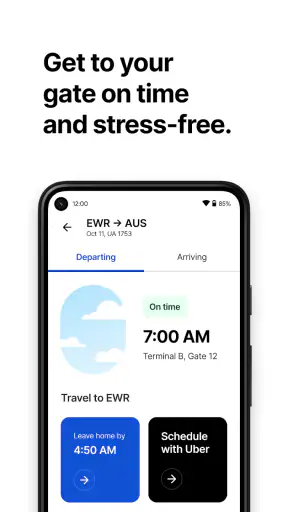
That makes the app different from a normal airline application. An airline app helps me check in, view a boarding pass, change a reservation, or receive flight updates. CLEAR is concerned with a different bottleneck: getting through the identity and access stage at a supported location. I would not install it expecting flight-management tools, and I would not judge it by the standards of a boarding-pass app.
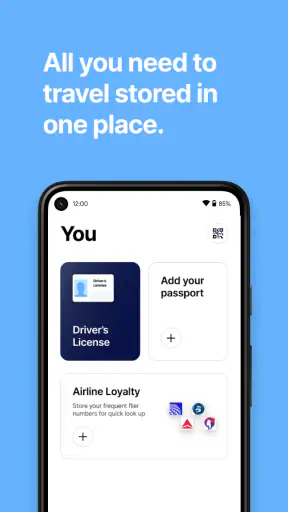
The same idea applies when comparing it with a standard government-issued identity document. Carrying the usual document remains the familiar fallback for ordinary travel, while CLEAR offers an additional identity workflow for people who use its service. The convenience depends on location and eligibility, so I see it as an optional layer rather than a universal replacement for normal travel preparation.
The app carries an Everyone content rating, which fits its straightforward travel purpose. It is available at no charge, and the current version is 4.13.0 for devices running iOS 11 or later. Those details make getting started relatively accessible, although the useful part of the experience depends on whether the service is relevant to the places I actually visit.
What the app changes at the airport
The real effect is a change in the order of operations. Instead of arriving at a checkpoint with identity verification treated as an entirely manual interaction, a member can use the CLEAR process at a supported location. In a crowded terminal, that can make the first part of the checkpoint feel more predictable, especially when I have already handled the account setup and know where the service is available.
That predictability is more valuable to me than the idea of simply moving faster. Travel delays rarely come from one single point, and no app can guarantee a short wait. A long line elsewhere in the terminal, a busy screening area, or a location without CLEAR can still determine how much time I need. The sensible approach is to treat the app as a way to improve one stage of the journey, not as permission to arrive later than usual.
There is also a psychological benefit. On a trip with a tight schedule, I prefer knowing which identity process I am going to use before I reach the checkpoint. That removes one decision from an already busy morning. I can check the app and my travel documents before leaving home, then approach the airport with a clearer plan instead of searching for the right lane after arriving.
That said, the app does not make airport security invisible. I still have to respect instructions from airport staff and complete the screening steps that apply to my journey. This is an important limitation because someone expecting a completely hands-off passage may be disappointed. CLEAR addresses identity verification and access to its supported experience; it does not turn the entire security operation into a phone-only process.
How I would prepare before relying on it
I would not wait until I am standing in a terminal to learn how the app works. The more useful workflow is to install it before a trip, review the account setup, and make sure I understand whether my departure airport supports the service. That preparation is one of the less obvious advantages of using a dedicated app: it gives me a place to become familiar with the process before time pressure arrives.
I would also keep my normal travel documents available. Even if CLEAR is my preferred route, a careful traveler should not assume that one digital service will be suitable at every airport or for every part of a journey. Having the usual identification ready gives me a practical fallback if I encounter a location where the service is unavailable, if the line is not useful at that moment, or if staff direct me through another process.
Another useful habit is to check the app as part of my departure routine rather than treating it as a one-time installation. Airport arrangements can vary, and my own needs can change from one trip to another. A quick review before leaving home helps me decide whether CLEAR is actually worth seeking out on that particular day. If the airport does not support it, there is no reason to spend time looking for a lane that is not part of the terminal’s available options.
I also think it is wise to keep the phone charged and accessible. That sounds obvious, but an identity-focused mobile workflow is less convenient when the device is nearly empty, locked away in luggage, or difficult to use in a crowded queue. CLEAR may simplify one part of the process, but it still depends on ordinary phone readiness and sensible travel habits.
A realistic airport morning with CLEAR
Imagine I am leaving early for a work trip. I have already checked in with my airline, saved my boarding pass, and packed my regular identification. Before leaving home, I open CLEAR to confirm that the airport I am using is relevant to the service. At the terminal, I look for the appropriate CLEAR area rather than joining the first line I see. The app has helped me decide what to look for, but the airport layout and staff directions still control what happens next.
At that point, the advantage is less about feeling like I have discovered a shortcut and more about having a defined process. I know why I am approaching that area, and I am not mixing up the identity service with airline check-in or the broader security screening. Once the identity portion is handled, I continue through the steps required at the airport. If the terminal is unusually busy, I may still need patience, but I am dealing with fewer unknowns.
This is where CLEAR makes the strongest case for itself: repetitive travelers who pass through supported airports often have more chances to benefit from a familiar identity workflow. Someone flying once for a holiday may appreciate the option, but the improvement is likely to feel smaller because the initial setup and location research are a larger share of the total experience.
For a family, the decision becomes more personal. The app may be useful for the adults who travel frequently, but I would not assume that every member of a group will experience the same benefit. Families should check the practical requirements and venue process before building the entire airport plan around CLEAR. When traveling with children, older relatives, or anyone who needs extra assistance, simplicity and staff guidance may matter more than choosing a specialized lane.
For a business traveler carrying only a small bag, the app can fit neatly into a repeatable routine: confirm the airport, keep identification ready, use the supported process when it makes sense, and continue toward the gate. That routine is where I notice the greatest potential value. It does not transform the trip, but it can make a familiar inconvenience feel more controlled.
Where it compares well with ordinary alternatives
The main alternative is simply using the airport’s regular identity and security route. That option has the advantage of being universal within the normal airport process: I do not need a separate service to understand that I should bring identification, follow signs, and listen to staff. For occasional travelers, that familiar approach may be entirely sufficient.
CLEAR compares better when I value consistency at supported locations. The regular route can vary in appearance and congestion, while a dedicated identity service gives frequent users a process they can recognize. The trade-off is that CLEAR only makes sense where its service is present and useful. The ordinary route wins on universality; CLEAR can win on routine and convenience for the right traveler.
It also differs from other trusted-traveler or expedited-screening programs in purpose. I would not treat CLEAR as interchangeable with every program that promises a smoother airport experience. Different services address different parts of the journey, and a traveler may need to understand which one handles identity verification, which one relates to screening, and which one is simply an airline or airport tool. CLEAR’s strength is its focused identity workflow, not an all-purpose travel shortcut.
That distinction prevents a common mistake: downloading the app and expecting it to solve every airport delay. If the problem is a late flight, a missing boarding pass, a checked-bag issue, or a gate change, an airline app is the better tool. If the problem is deciding whether a supported identity lane could make a familiar airport routine easier, CLEAR is much more relevant.
The friction I would consider before installing
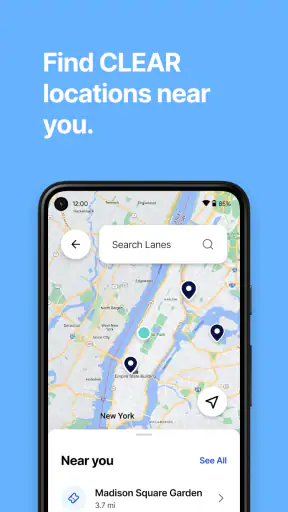
The first limitation is coverage. The service is useful only at participating locations, so the app cannot provide the same value at every airport or venue. This is the most important trade-off, and it is why I would check my usual airports before forming an opinion. A traveler who rarely visits supported locations may find that the app adds another account without changing many real journeys.
The second limitation is expectation management. CLEAR can make the identity stage more organized, but it does not guarantee that the entire checkpoint will be quick. A user who joins expecting a universal fast pass may blame the app for delays that are actually caused by screening capacity, terminal congestion, or other airport procedures. I prefer to view it as a targeted convenience, not a promise about total travel time.
There is also a setup cost in attention. Even though the app itself is free, I still need to spend time understanding the service, preparing my account, and learning where it fits at the airport. “Free” does not mean frictionless. For a person who takes only an occasional flight, the ordinary process may be easier simply because it requires no additional planning.
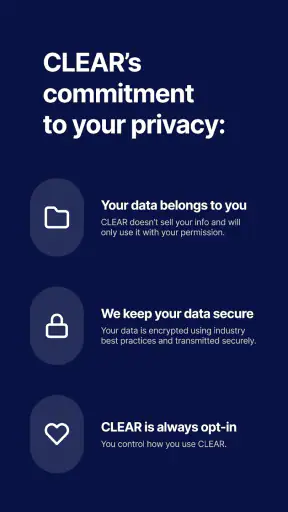
Privacy and trust deserve careful thought as well. An identity-verification service naturally asks me to be comfortable with its role in my travel routine. I would read the app’s current explanations and permissions for myself, use a device I control, and avoid handing my phone to strangers. That is not a criticism unique to CLEAR; it is a sensible consideration whenever a mobile app participates in identity-related access.
Finally, I would not let the app replace basic airport planning. I still want enough time for parking, public transport, baggage, airport navigation, and unexpected queues. The most responsible way to use CLEAR is to let it remove some uncertainty while keeping a normal time buffer. That approach preserves its convenience without turning it into a risky assumption.
Who gets the most from the focused workflow
In my view, the strongest audience is the frequent traveler whose routine repeatedly includes airports where CLEAR operates. That person can spread the learning effort across many trips and benefit from recognizing the same identity process. The app is also appealing to travelers who dislike handling several small administrative steps at a crowded checkpoint and prefer to prepare before arriving.
It may suit people who travel for work, visit several major terminals, or regularly attend supported stadium and venue events. The value is not limited to one kind of trip; the common thread is repeated exposure to places where the service is available. If I use it only once, the convenience may be pleasant. If I use it as part of a recurring travel pattern, the benefit becomes easier to notice.
On the other hand, I would probably skip it if my travel is rare, my usual airports do not support the service, or I strongly prefer keeping airport preparation to the airline app and a physical identity document. I would also be cautious about recommending it as the only plan for a family group or a traveler who needs extensive assistance. In those cases, a simple, well-understood routine may be more valuable than an additional identity workflow.
The app’s reach suggests that many travelers find the concept worthwhile: it has passed one million installs, with a 4.2 average from around fifty-six thousand ratings and roughly four thousand seven hundred written reviews. I read that as evidence of broad interest rather than proof that every traveler will benefit equally. A popular travel tool can still be a poor match for someone whose airports, habits, or expectations do not align with it.
What I appreciate most is that CLEAR has a clear job. It does not pretend to be a complete travel companion. The developer, Alclear LLC, has built the experience around a specific moment that often feels repetitive and stressful. That focus is its main strength, but it is also the reason I would evaluate it by my own airport pattern rather than by the app’s install count or general reputation.
My recommendation after using it
I would recommend trying CLEAR if you frequently travel through supported airports or venues and want a more deliberate identity-verification routine. Before a trip, I would install it, complete the setup with time to spare, check whether my location is covered, and keep my ordinary identification and boarding information ready. Used that way, it can make a recurring airport task feel more manageable without encouraging unrealistic promises.
I would not recommend downloading it simply because every travel app sounds useful. Occasional flyers may gain little, and anyone expecting it to replace airline tools, standard identification, or the full security process is likely to be frustrated. The right question is not whether CLEAR makes travel effortless. It is whether its focused identity service solves a problem that appears often enough in my own journeys to justify adding it to my routine.
For me, the answer is yes when the airport and the traveler line up with the service. The app is free, approachable, and specific about the part of travel it tries to improve. Its best result is modest but meaningful: fewer decisions at a busy checkpoint and a clearer plan for the identity stage. That is enough to make it worth considering for frequent users, while still leaving occasional travelers with a perfectly reasonable reason to stick with the usual airport process.


